

Introduction to Fundamental Investing – Invictus Research
$29.00
Discount 20% if your total cart over $150
- Satisfaction Guaranteed
- Fast and forever download link
- Secure Payments
- Reupload FREE
Description
The financial landscape can often seem daunting, characterized by volatility and complexity. The Introduction to Fundamental Investing offers a structured and insightful way to navigate this space, leveraging fundamental analysis to achieve financial stability and informed investment decisions. In this article, we will delve into the elements that shape this approach and explore how it can empower investors at any level.
Introduction to Fundamental Investing
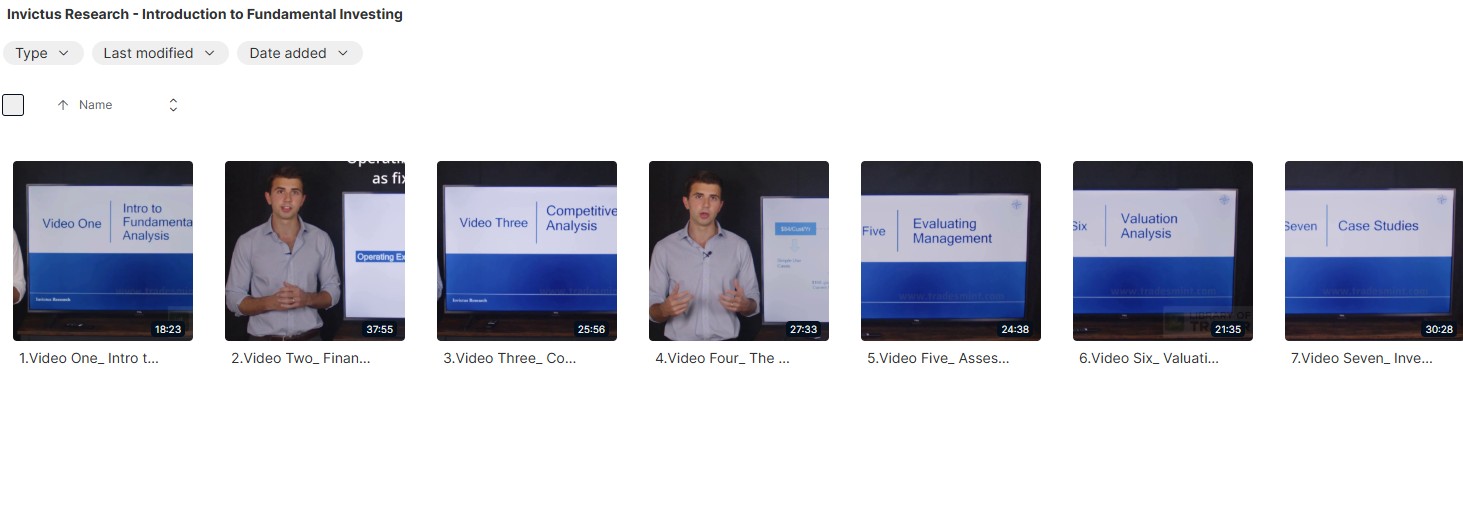
Fundamental investing is more than just a strategy; it is a comprehensive framework aimed at unraveling the complexities of financial markets. With the continuous shifts in economic conditions, the importance of a solid foundational understanding cannot be overstated. This notion forms the bedrock of the Introduction to Fundamental Investing course offered by Invictus Research. Designed to cater to both novices and seasoned finance professionals, it transforms the art of investing into a science grounded in evidence and analysis.
By employing fundamental analysis, participants learn to break free from the allure of speculative decision-making. Instead, they harness the power of data-driven evaluation. A core tenet of the course is that financial stability and the pursuit of growth stem from a thorough understanding of a company’s intrinsic value. This is not just about knowing a company’s stock price; it’s about digging into financial statements, competitive environments, potential market opportunities, and management quality.
The course serves as a vital toolkit for those in pursuit of financial independence and career advancement. It empowers individuals to make informed decisions during turbulent market phases, relying on solid insights rather than fleeting sentiments. Armed with analytical skills and frameworks, participants can interpret data and discern patterns, essential for thriving in today’s unpredictable economic climate.
Key Elements of the Course Structure
The design of the Introduction to Fundamental Investing course is intended to foster a holistic understanding of financial analysis.
This structured methodology includes four primary pillars that each student can grasp and master:
- Financial Statement Analysis
- Competitive Positioning
- Market Opportunities
- Management Quality
Together, these components create a cohesive learning experience, bridging theoretical groundwork with practical application.
Achieving Competence Through Structured Learning
By segmenting the curriculum into manageable units, participants can navigate complex financial concepts more effectively. As financial markets continue to evolve, the capacity to assess and correlate various financial indicators becomes invaluable.
This modular approach guarantees that every student, whether brand new to investing or bridging gaps in their knowledge, can build confidence as they deepen their expertise. Moreover, the blend of theory and practice ensures that students can apply what they learn immediately, reinforcing their knowledge and skills through practical scenarios.
Invictus Research
Invictus Research stands at the forefront of financial education, demonstrating a commitment to fostering a robust understanding of fundamental investing principles. The organization specializes in demystifying finance for a diverse audience, offering structured learning paths through practical and interactive educational experiences. At its heart lies a passion for empowering individuals to take charge of their financial futures.
Invictus Research recognizes that the finance landscape is constantly evolving, thus necessitating adaptable education strategies. Their approach hinges on traditional finance principles while integrating innovative techniques that resonate with modern learners. This synthesis of old and new allows for richer insights and a more nuanced understanding of market dynamics.
The core values of Invictus Research are evident in its comprehensive curriculum encompassing analytical techniques and real-world applications. Investors are not only instructed on how to interpret complex data but also on the important aspects of decision-making based on their analyses. This dedication to clarity and rigor ensures that learners leave with a strong sense of confidence in their investment capabilities.
Educational Philosophy and Innovation
The instructional design of Invictus Research showcases an emphasis on innovative teaching methods.
Through interactive modules, participants engage in simulated market scenarios, enhancing their analytical abilities while also encouraging them to think critically about investment choices.
By involving participants in real-world applications and discussions, the course fosters a community of learners who share insights and experiences, further enriching the educational experience.
Commitment to Continuous Learning
A hallmark of Invictus Research’s educational framework is the commitment to lifelong learning in finance.
As the markets shift, so too does the need for investors to adapt to new information and technologies.
The organization promotes an environment of continuous improvement where students are encouraged to stay informed on market trends, integrate new knowledge, and refine their analytical skills, ensuring they remain competitive in an ever-changing landscape.
Financial Statement Analysis
At the heart of fundamental investing lies financial statement analysis, a vital skill that aids investors in evaluating a company’s historical performance and current financial health. Mastery in this area provides investors the capability to draw meaningful conclusions from a company’s financial data, navigating through layers of numbers to uncover the stories they tell.
Understanding a company’s financial statements—such as income statements, balance sheets, and cash flow statements—is crucial. The ability to analyze these documents reveals insights into profitability, liquidity, and overall financial stability. Investing in training that emphasizes these skills can significantly impact one’s success in identifying sound investment opportunities.
Grasping Financial Statements
The astute investor must familiarize themselves with the structure and nuances of the different types of financial statements.
The income statement lays bare a company’s revenues, expenses, and profits over specific periods, offering insight into its operational efficiency.
A thorough analysis can expose trends in earnings, helping investors assess if a company’s profits are sustainable or if they are merely a product of temporary circumstances.
Moreover, the balance sheet provides a snapshot of a company’s assets, liabilities, and shareholders’ equity at a given moment. This document allows investors to evaluate a company’s capital structure and risk profile. Understanding a company’s indebtedness versus its assets enables investors to make informed decisions about its long-term viability.
Lastly, the cash flow statement illustrates how cash flows in and out of a business, highlighting the health of day-to-day operations. Negative cash flow can be indicative of underlying issues that manifest in a company’s operations, even if it reports positive net income. Investors must pay careful attention to cash flow to identify potential red flags.
Interpreting Financial Ratios
An effective way to streamline the evaluation of financial statements is through the use of financial ratios.
Ratios such as the Price-to-Earnings (P/E) ratio, Debt-to-Equity (D/E) ratio, and Return on Equity (ROE) provide quick insights into crucial financial metrics.
These ratios facilitate comparisons among industry peers and reveal a company’s relative standing in the market.
The P/E ratio helps assess whether a stock is undervalued or overvalued relative to its earnings. A high P/E might indicate high growth expectations, while a low P/E could suggest undervaluation or potential difficulties.
The D/E ratio measures financial leverage, reflecting a firm’s reliance on debt to fuel growth. A higher ratio may raise concerns about a company’s ability to manage debt, particularly during periods of economic downturn. On the other hand, a stable or low D/E ratio might signal a company’s stability and lower risk profile.
ROE, meanwhile, reinforces insights into management’s efficiency in utilizing shareholders’ equity to generate profits. A consistently high ROE can indicate good management and sustainable growth practices, which are major draws for potential investors.
Practical Application of Financial Analysis
The real power of financial statement analysis is unlocked when investors apply what they learn to real-world scenarios.
Participants in the Introduction to Fundamental Investing course engage in case studies and role-playing exercises that reinforce their learning.
Through hands-on applications, they cultivate the ability to make informed judgments based on robust analysis, boosting their confidence and expertise.
Collectively, mastering financial statement analysis equips participants with the critical thinking skills required to approach the market thoughtfully and strategically. This foundational knowledge lays the groundwork for identifying potential stock opportunities and achieving long-term financial success.
Competitive Positioning
In a landscape crowded with competitors, understanding a company’s competitive positioning is both crucial and multifaceted. This pillar of fundamental investing revolves around analyzing how a business operates in relation to its industry peers, which can dictate its ability to thrive over time.
Identifying whether a company possesses a competitive advantage is essential for determining its potential for sustained success. A company may have a unique product, a well-established brand, or proprietary technology that gives it an edge.
The relative strength of these advantages becomes clearer through comprehensive analysis and informed assessments. This focus on competitive dynamics ensures that investors can discern not just the company’s current standing but also its trajectory in relation to evolving market conditions.
Evaluating Market Position
Investors need to understand the terrain in which a company operates.
This entails evaluating direct competitors and comprehending market dynamics that influence company performance.
Competitive analysis can unveil valuable insights such as pricing strategies, product differentiation, and brand loyalty, which all play crucial roles in determining market share.
Understanding how consumer preferences shift, alongside the responses of competitors, will help investors anticipate market trends and the potential for a company to adapt in a shifting landscape.
Analysts can leverage tools like SWOT analysis (assessing strengths, weaknesses, opportunities, and threats) to gain a holistic view of a company’s position relative to its competition.
Assessing Moats and Barriers to Entry
A deeper dive into competitive positioning reveals the concept of economic moats—those competitive advantages that protect a company from its rivals and sustain its profitability.
Companies with established moats—be it brand equity, cost advantages, or network effects—are less vulnerable to competitive pressures and can maintain pricing power.
Investors must evaluate how entrenched the moat is and whether it is sustainable in the face of technological advancements or changing consumer behaviors.
Recognizing the barriers to entry within the industry also plays a pivotal role. High capital requirements, regulatory hurdles, or significant brand loyalty can deter new competitors from entering a market, thus positioning the existing players favorably.
The Role of Market Trends
Successful investors must pay attention to not only the current landscape but also future trends and how they affect competitive positioning.
Shifts towards sustainability, technological innovations, and changing societal values can profoundly impact industry dynamics and alter competitive advantages.
For instance, companies that adapt to technological advancements may solidify their market position, while laggards risk losing relevance. Hence, investors should assess how well a company’s strategy aligns with emerging trends.
Understanding the competitive landscape enables savvy investors to evaluate companies holistically, discerning which have the potential to not only survive but thrive over the long term. The subsequent deployment of funds in companies with solid competitive positioning can lead to sustained financial rewards.
Market Opportunities
Identifying and capitalizing on market opportunities is a central tenet of successful investing. In a world of constant economic shifts and emerging trends, recognizing sectors poised for growth can provide the impetus for strategic investment decisions.
Market opportunities aren’t merely about the current state of a company; they encompass broader market forces and trends that can substantially impact a company’s future.
Understanding the larger macroeconomic environment is crucial. Factors such as demographic changes, technological advancements, regulatory shifts, and global events all influence consumer behavior and market dynamics.
Investors who grasp these opportunities are better positioned to invest in companies likely to experience growth, thereby enhancing their potential returns.
Analyzing Economic Indicators
Savvy investors must remain attuned to economic indicators, as these data points signal conditions that can create or diminish opportunities.
Key indicators such as GDP growth, unemployment rates, and inflation provide insights into the overall health of an economy, which then influences market sentiment and investment decisions.
Staying informed on these indicators allows investors to proactively address potential market influences and adjust their strategies accordingly.
Additionally, industry-specific indicators—like supply chain dynamics, technology adoption rates, or regulatory environments—can provide nuanced insights into specific sectors, revealing where institutional funds are likely to flow.
Sector and Niche Potential
Certain industries and niches may emerge as ripe for investment based on consumer trends and technological advancements.
Investors need to explore sectors traditionally seen as stable and those experiencing disruptive innovations.
For instance, sectors such as renewable energy, biotechnology, and e-commerce have expanded rapidly in response to shifting consumer preferences and technological developments.
Identifying companies positioned to leverage these trends requires diligent analysis, considering market positioning and the company’s strategic efforts to capitalize on opportunities.
Understanding how different sectors interact with the economy also enables investors to diversify their portfolios effectively, mitigating risks while optimizing potential returns.
Thought Leadership and Vision
Ultimately, the key to perceiving market opportunities lies in a company’s vision and thought leadership.
Companies that embrace innovation and are willing to adapt to changing environments often outperform their competitors and capture market share.
Investors should analyze not just a company’s existing strengths, but also its plans for growth and outreach in the future.
An open and entrepreneurial mindset can create pathways to resilience, ensuring that businesses navigate challenges effectively while positioning themselves advantageously in an evolving market landscape.
Management Quality
An often underestimated aspect of fundamental investing is the evaluation of management quality. The leadership team behind a company can significantly influence its direction and performance.
Strong management not only drives day-to-day operations but also establishes a vision that fosters innovation and growth. Recognizing the qualities that distinguish exceptional management is critical for assessing potential investment opportunities.
Investors equipped with analytical tools can discern management effectiveness from a variety of perspectives, evaluating how different leadership styles impact a company’s performance and market positioning.
Leadership Competencies and Track Record
An effective way to gauge management quality is by assessing both competencies and past performance.
Investors must analyze the qualifications of the executive team and their industry experience.
Leadership teams with a proven track record in navigating market challenges or successfully executing strategic initiatives often inspire investor confidence.
A history of strong performance metrics during past downturns or notable achievements in scaling operations can suggest future success, particularly in turbulent market conditions.
Corporate Governance and Ethics
An often overlooked but essential element of management evaluation is corporate governance.
The governing structure and ethical standards of a company inform investors about its transparency and accountability.
Strong governance protocols not only mitigate risks but also establish trust among stakeholders, paving the way for sustainable growth.
Investors must look for active board oversight, diverse governance practices, and adherence to ethical standards as key indicators of a company committed to long-term value creation.
Management’s Vision and Strategy
The vision set forth by management serves as a guiding force for a company’s trajectory.
Investors should explore the strategic direction and initiatives management plans to pursue, including innovation, expansion, and cost management.
Understanding how management aligns with market trends and responds to potential challenges reveals an organization’s adaptability.
Companies equipped with visionary leadership are more likely to capitalize on emerging opportunities, inspiring investor confidence and long-term commitment to the organization.
Conclusion
In today’s dynamic financial landscape, a comprehensive understanding of fundamental investing becomes indispensable. The Introduction to Fundamental Investing course by Invictus Research stands as a pivotal resource for aspiring investors, fostering a rigorous approach to decision-making grounded in thorough analysis. By emphasizing core principles such as financial statement analysis, competitive positioning, market opportunity identification, and management quality, the course encapsulates a holistic methodology for financial success. This structured and insightful approach equips both novices and seasoned investors with the necessary skills to navigate market volatility with confidence, ultimately paving the way for sound investment identification and sustained financial growth.




 Bernie Doran Course