
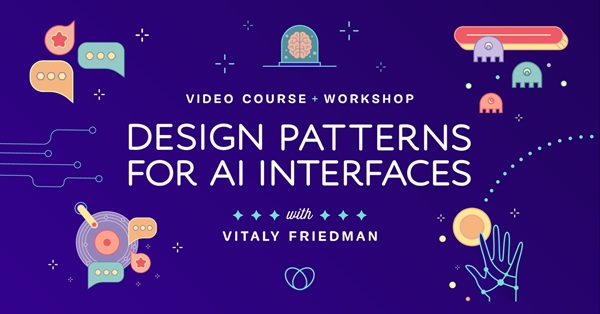
[GroupBuy] Design Patterns for AI Interfaces
$49.00
Discount 20% if your total cart over $150
- Satisfaction Guaranteed
- Fast and forever download link
- Secure Payments
- Reupload FREE
Description
The synergy of user experience and smart curve design with AI is rapidly revolutionizing the technological landscape. As artificial intelligence becomes an integral part of our daily interactions, the focus shifts toward creating interfaces that not only respond but also anticipate user needs, fostering a seamless and intuitive design ethos.
Smart Curve Design with AI
In today’s fast-paced digital environment, the emphasis on smart curve design with AI transcends mere aesthetics; it embodies the principles of usability and user satisfaction. Users increasingly expect AI systems to behave like intuitive partners rather than tools requiring substantial input effort. This expectation is where smart design patterns come into play. By combining effective design principles with intelligent behavior, AI-driven interfaces can significantly enhance user experiences.
Understanding how users think and interact with AI involves investigating their motivations and challenges. When designers consider the user’s journey, they can identify touchpoints where design can facilitate a smoother transition. This approach leads to interfaces that do not overwhelm the user but instead guide them gently toward their goals. It redefines interactions by placing the human experience at the center of design, allowing technology to serve not just as a tool, but as an enriching partner.
This advancement represents a departure from traditional chat interfaces that often rely heavily on verbose text interactions. Users often face challenges pertaining to misunderstandings and extensive typing requirements, leading to frustration and disengagement. By moving beyond standard conversational user interfaces, designers can explore innovative pathways that blend visual simplicity with intelligent behavior, ultimately fostering trust and promoting a more user-centric landscape.
The Role of User Experience in Smart Design
User experience is pivotal in the realm of smart curve design with AI as it encapsulates how users engage with AI technology. A deep understanding of user needs informs design choices, ensuring that every element serves a specific purpose. Moreover, a solid grasp of how users think and behave allows designers to craft experiences that align closely with their expectations.
Creating an emotionally resonant connection is essential, as this builds trust. For instance, if a user perceives an AI interface as helpful and reliable, their likelihood of returning to and relying on that interface increases. Trust can be created through consistent responses, efficient resolution of queries, and an overall positive interaction history. The emotional aspect of user experience should never be underplayed; an AI interface that can communicate empathy or support is far more likely to retain users over time.
A user-centric approach also encourages feedback loops that empower designers to refine their AI interfaces continually. Engaging users in the design process helps gather insights that might otherwise be overlooked. Reflecting on user comments and adapting accordingly can invigorate a design while enhancing both usability and satisfaction.
Incorporating Accessibility into AI Design
An integral component of smart curve design with AI is the principle of accessibility. A truly effective AI interface must cater to diverse audiences, including those with disabilities. Incorporating accessibility features broadens the range of users who can successfully engage with the AI.
Designers can leverage features like voice recognition, screen reader compatibility, and adaptable UI components to create an inclusive interface. These features not only benefit those with disabilities but enhance the user experience for everyone by offering alternative ways to interact. An environment where all users can participate creates a richer tapestry of experiences, which ultimately benefits both the users and the organizations that support them.
The future of successful smart design patterns will lie in recognizing the need for and committing to inclusivity. By proactively addressing accessibility, designers not only comply with industry regulations but also position their products as leaders in user experience. This approach reveals a commitment to not only designing for users but designing with users in mind.
AI Patterns
The exploration of AI patterns in interface design represents a significant leap forward in the technology landscape. As artificial intelligence continues to evolve, design strategies must also adapt to integrate these advancements effectively. AI patterns encompass not only the visual representation of data but the underlying design ideologies that influence user interactions and perceptions.
Understanding AI patterns involves analyzing how users interact with machine learning models and predictive algorithms. As users become more accustomed to AI interfaces, their expectations regarding these interactions evolve. Designing with this evolution in mind means creating experiences that leverage AI not only as a functionality but as an enhancement of user engagement. When users feel understood and anticipated by AI systems, their interactions transform into collaborative experiences.
Furthermore, the importance of flexibility in AI patterns cannot be overstated. With rapid technological advancements, it is crucial that designers remain agile, willing to adapt their approaches to incorporate new findings and best practices in AI design. This ongoing evolution ensures that interfaces remain relevant, accessible, and engaging, fostering strong connections between the technology and its users.
Exploring Design Elements of AI Patterns
At the heart of effective AI patterns are the design elements that facilitate more natural interactions. For instance, visual cues can be harnessed to suggest actions or responses that align with user expectations. By leveraging elements like icons, colors, and typography judiciously, designers can guide users in ways that feel instinctive rather than cumbersome.
Voice interfaces represent a prime example of AI patterns in action. When users engage with voice-activated systems, the design must account for natural language processing, accents, and speech variations. This comprehensive understanding emerges from ongoing learning and iteration, allowing designers to create reliable and responsive systems that genuinely enhance user interactions.
The design of AI-driven interfaces necessitates careful consideration of context. When users interact with an AI interface, it is not simply a matter of responding to commands but understanding intent. A successful AI interface must analyze user input within its context, making connections between past interactions and current requests to provide relevant suggestions. Addressing this multifaceted nature of user engagement involves the artful deployment of design elements that can dynamically adapt to each user’s unique situation.
The Impact of User-Centric AI Patterns
Emphasizing user-centric AI patterns ultimately catalyzes the design process by prioritizing user needs and preferences. When the focus becomes user inputs, the resulting patterns invite a deep collaborative relationship between the technology and the user. This not only leads to a better understanding of user behavior but also enhances trust between users and AI interfaces.
Moreover, the positive effects of establishing a user-centric approach extend beyond immediate engagement metrics. Over time, as designers integrate feedback and evolve their AI patterns to deepen connections, users become not merely participants but advocates. Advocacy stems from satisfaction and trust; satisfied users will return, while advocates will encourage others to engage with the technology that served them well.
The growing importance of AI patterns signifies a turning point in the evolutionary arc of interface design. By exploring and implementing these patterns, designers can craft interactions that empower users and allow their AI interfaces to flourish in increasingly complex environments. The vision is one where the technology understands and adapts to human needs, fostering a lasting relationship that improves continuously.
Vitaly Friedman
The relevance of Vitaly Friedman in the context of design, particularly within AI, is unparalleled. As the Editor-in-Chief and creative lead of Smashing Magazine, he has dedicated his career to the exploration of web design, usability, and now the inclusion of AI in interface development. His insights into user experience design and advocacy for best practices in AI engagement underscore the significance of understanding user motivations without sacrificing technical feasibility.
Friedman’s work is instrumental in empowering designers with actionable knowledge and practical strategies tailored to address the emerging challenges of AI design. His unique approach merges creative vision with technical realities, ensuring designers are equipped to shape AI-driven user experiences that are both reliable and effective. His explorations of design patterns over the past years reflect a commitment to evolving the understanding of AI’s potential in enhancing user engagement, particularly in organizing complex tasks.
In leading the Designing AI Interfaces masterclass, Friedman aims to transcend the limitations associated with traditional AI interfaces. By guiding fellow designers and engineers through a comprehensive framework of actionable design principles, Friedman instills a sense of empowerment that resonates throughout the design community. His philosophy is deeply rooted in creating user-centric experiences that bridge the gap between technology and human interaction.
Insights from Vitaly Friedman on AI Design
Friedman’s insights uncover a wealth of knowledge critical for understanding how to design AI interfaces that resonate with users. His research into user experiences has unveiled vital best practices that can substantially improve how users perceive and interact with AI systems. By emphasizing the importance of simplicity, Friedman encourages designers to eliminate unnecessary complexity in their designs, thus fostering a smoother user journey from start to finish.
Moreover, his focus on establishing trust between users and AI highlights the importance of reliable systems. When users can depend on AI to deliver accurate results consistently, their likelihood of engaging with that technology increases dramatically. These insights provide a framework through which designers can explore the critical elements of building trust within their AI interfaces.
Friedman’s promotion of knowledge-sharing amongst designers has paved the way for collaborative learning and growth within the community. By actively engaging contemporary design challenges through feedback and iteration, stakeholders in the UI/UX space can remain at the forefront of innovation and development. This collaborative spirit aligns with the very principles of human-centered design, where sharing insights and collective learning generates greater value for users and designers alike.
The Vision of a User-Centric Design Community
As a thought leader in the UI/UX space, Vitaly Friedman envisions a design community that embraces collaboration to hone its present and future capabilities. His contributions inspire professionals to engage actively with their peers, share experiences, and strive for excellence in AI design. This vision cultivates a sense of belonging among designers, encouraging them to take ownership of their work and continuously seek improvement.
Fostering a community where knowledge is shared enhances profession-wide understanding of AI design patterns and the necessity for collaboration among designers, engineers, and product teams. By creating environments where experimentation and risk-taking are encouraged, the community can drive forward a unified vision for the future of smart design, resulting in products that truly serve their users.
Friedman’s emphasis on a shared journey ultimately leads to better-designed AI interfaces. Collaboratively gathered insights result in diverse perspectives that address unique user needs and challenges. By amplifying voices from varying experiences, designers can craft comprehensive solutions that encapsulate a championed user experience, paving the way for the next generation of intelligent interfaces.
AI Design Patterns
The exploration of AI design patterns is essential for ensuring that artificial intelligence interfaces don’t just operate but excel. By understanding the underlying principles of effective AI functionality, designers can create experiences that feel inherently human and are capable of fulfilling genuine user needs.
AI patterns highlight not just the technical intricacies of algorithmic responses but the psychological factors at play during user interactions. Developers must work to ensure that the interfaces they design are grounded in user interactions that feel intuitive and natural. This is where the art of AI design patterns shines; creating systems that can perceive context, self-learn, and adapt based on individual user behavior.
A successful AI pattern doesn’t merely revolve around algorithms but integrates an understanding of usability and aesthetic considerations. When the interface is visually engaging while being functionally reliable, it fosters a stronger connection between AI and its users. An ongoing effort to align core design principles with user expectations establishes a framework where innovation flourishes.
Structuring AI Design Patterns
The structure of AI design patterns incorporates the interplay between several dimensions, including UX research, user feedback, and continuous iteration. At its core, a well-designed AI pattern should facilitate seamless user experiences, enabling users to interact with AI systems naturally and comfortably.
When implementing effective AI design patterns, it’s crucial to ensure that the interactions remain fluid and adaptive. For example, when a user requests assistance, the AI’s response should feel immediate and natural, responding to the user’s needs without invasive chirps or notifications. When the interaction flows effortlessly, it leads to higher user satisfaction and decreased frustration.
Furthermore, making AI patterns adaptable allows for a wider range of user interactions. For instance, an interface that can transition from a chat-based format to a more visual dashboard can cater to different user preferences, empowering individuals to engage with the system in a way that suits them best. This adaptability is foundational in enhancing user experience by inviting users to leverage the benefits of AI at their own pace and comfort level.
The Importance of Continuous Learning in AI Design
The landscape of AI design patterns is dynamic; therefore, a commitment to ongoing learning is crucial. Designers and developers must remain aware of industry changes and continually chip away at old conventions to foster innovation. As team members engage with emerging technologies, they should also integrate timely feedback to refine existing patterns, fostering cohesive user journeys.
Learning from real-life examples offers invaluable insights into how AI design patterns can be restructured or improved. Collaboration among professionals allows them to share success stories and lessons learned, informing ongoing enhancements and adaptations to AI interfaces. This iterative evolution between conceptualizations and real-world applications helps bridge the gap between theoretical practices and practical implementations.
Ultimately, the continuous learning ethos results in AI design patterns that elevate user experiences rather than hinder them. Embracing a culture of experimentation and adaptability enhances the likelihood that AI products resonate with users, ensuring interfaces remain engaging, effective, and forward-thinking.
AI Friedman
AI Friedman acts as a beacon of knowledge within the intersection of artificial intelligence and design. Through his extensive career and deep-rooted understanding of user-centric principles, he has actively contributed to the evolving conversation on the best approaches to developing AI interfaces that genuinely serve users.
His work reflects an intricate balance between creativity and technical acumen, showcasing how AI can enhance user experiences while respecting realistic constraints. The guiding principles established through Friedman’s research not only empower designers but help create products that users actively embrace. By unraveling the complexities of AI interactions, he champions a design philosophy that aligns technology with human behavior.
Friedman’s understanding of the nuanced dynamics of AI engagement places him at the forefront of developing actionable insights. For instance, by exploring specific user struggles—such as misinterpretations within text-heavy interactions—Friedman identifies areas for improvement, refining the design patterns that govern AI interfaces. This keen observational prowess allows him to dismantle existing barriers and explore new pathways of user interaction.
Breeding Ground for Innovation
In examining AI Friedman’s contributions to the field, it is essential to recognize the ingenuity he brings to fostering innovation. His thoughts reveal how AI design can harness flexibility and responsiveness to create engaging user experiences. This adaptability is vital; as user preferences evolve, interface designs must also transform to remain relevant.
One notable aspect of his philosophy revolves around understanding user intent deeply. When designers know what users seek from AI interactions—even before they articulate their needs—they help craft intuitive experiences that exceed expectations. Fulfilling the user’s ultimate desire without presenting any friction during the journey establishes a seamless bond between the user and technology.
Moreover, Friedman’s commitment to education emphasizes the need for designers to cultivate a growth mindset, expanding their toolkit with knowledge continuously. His emphasis on revisiting AI design principles and patterns helps inject fresh perspective and creativity into the design process, ultimately nurturing groundbreaking innovations that push the boundaries of existing technology.
Fostering Collaboration to Enhance AI Design
Another pillar of AI Friedman’s philosophy is the importance of fostering collaboration across diverse teams, including designers, engineers, and product managers. The complexity of AI demands an interdisciplinary approach that integrates diverse perspectives and expertise. Through collaborative exchanges, fair dialogue arises, producing a more holistic understanding of the challenges at hand, and ensuring that solutions cater to user needs.
Collaboration also catalyzes the sharing of ideas and techniques that can drive forward more effective AI design patterns. When stakeholders work together, they can optimize solutions by pooling resources and knowledge, ultimately elevating the quality of the final product. As designers learn from engineers about system capabilities and engineers gain insights into user behavior, a mutually enriching exchange occurs, producing well-rounded AI experiences.
This collective approach ultimately leads to well-designed products that are not only technically sound but user-friendly as well. The resulting designs thrive on the fusion of creativity and technicality, allowing them to capture the essence of human-centered engagement through AI Friedman’s guiding principles.
Artificial Intelligence Design Patterns
The adoption and exploration of artificial intelligence design patterns are becoming indispensable in building interfaces that facilitate intuitive user experiences. These design patterns encapsulate not just functionality but also embody the emotional engagement that users expect when interfacing with AI technology.
Understanding and implementing effective design patterns can greatly enhance AI’s adaptability to varied user interactions. These patterns often crystallize insights gained from numerous encounters with real-world scenarios, guiding designers towards creating solutions that feel organic and effortless for users. Maintaining an emphasis on usability assists interfaces in not just meeting but exceeding user expectations, ultimately fostering a loyal following.
Moreover, as artificial intelligence design patterns mature, they contribute to a growing repository of knowledge that serves the entire design community. This knowledge base, enriched by experimentation and collaboration, empowers designers to build upon existing patterns while creating customized solutions tailored to specific user needs.
Identifying Key Characteristics of AI Design Patterns
A successful artificial intelligence design pattern is often characterized by key traits that address user needs and foster optimal engagement. For instance, user feedback loops are essential for discerning patterns between user behaviors and AI responses, leading to iterative improvements. By gathering users’ insights and incorporating them into the design process, teams not only build more effective interfaces but actively engage users in a collaborative dialogue.
Clarity and simplicity are also vital elements. A design pattern that gravitates toward minimalism allows elements to shine undistracted, enhancing the user’s ability to focus on their objectives. When users encounter an interface devoid of excess noise, it becomes easier for them to navigate and derive value from their interactions.
Finally, the incorporation of adaptability into AI design patterns can significantly enhance user satisfaction. By acknowledging that users possess varying preferences, designing flexible patterns that accommodate those differences can help foster a more personalized experience. This form of design establishes a sense of ownership for users and aligns the AI interface with individual user contexts, nurturing deeper engagement.
Enhancing User Experience through AI Design Patterns
Leveraging artificial intelligence design patterns can significantly improve user experiences by offering solutions that empower users rather than frustrate them. These patterns promote effective interactions through continuous learning that informs iterative product enhancements, ensuring the design remains relevant and fresh as technology evolves. Instead of static interfaces, designs worthy of AI must embrace dynamism by responding to the complexities of real-world interactions.
For designers, the challenge lies in maintaining a laser-like focus on their users’ needs while navigating the intricacies of AI systems. Meaningful technology should never take center stage at the expense of user engagement. Instead, incoherent or overly complex AI responses should be minimized to avoid overwhelming users, steering them toward successful interactions that feel fluid and intuitive.
The responsiveness made possible through artificial intelligence design patterns sets the stage for an evolving conversation between users and technology. As systems learn and adapt based on feedback, the relationship between AI and user deepens, breeding satisfaction and loyalty. This reciprocal exchange lays the groundwork for smart design that evolves beyond its original parameters while staying firmly rooted in user experience.
AI Design Course
Embarking on an AI design course proves essential in honing the skills necessary to tackle the complexities of designing human-centered AI interfaces. As the demand for sophisticated AI applications rises, professionals must actively pursue courses that equip them with the knowledge and tools to create user-friendly AI experiences.
Courses targeting AI design cover various essential topics, including user research, interaction design, and the application of design patterns that lean into artificial intelligence principles. Furthermore, practical approaches, case studies, and actionable design playbooks lay the foundation for a hands-on learning experience, equipping professionals with relevant insights directly applicable to real-world challenges.
Moreover, an AI design course nurtures a deeper understanding of complex user behaviors when interfacing with AI systems. By breaking down design principles, learners gain insights into the motivations that drive user engagement, enabling them to formulate comprehensive solutions that empower individuals.
Curriculum Design for AI Design Courses
When developing an AI design course, it is crucial to tailor the curriculum to address the specific needs of designers and developers alike. Incorporating topics like ethics in AI design, understandability, and user-centered approaches ensures learners gain not only a grasp of theoretical concepts but practical applications as well.
Moreover, course structure should also intersperse theory with practice, incorporating hands-on projects and live exercises where participants tackle real-world problems using learned principles. These practical activities nurture collaboration and peer feedback, allowing designers to refine their skills through the lens of a community, enhancing their understanding of AI in design.
Learning from industry leaders who specialize in AI design patterns helps tie together the course material while providing students with fresh, innovative methodologies. These thought leaders can inspire learners to explore imaginative solutions that may lead to breakthroughs in creating smart interfaces.
The Importance of Networking within AI Design Communities
Participating in an AI design course opens doors to networking opportunities, exposing professionals to like-minded individuals who share a passion for advancing user-centric designs. These connections serve as invaluable resources as designers navigate the evolving landscape of artificial intelligence, allowing them to share insights and tools, ultimately enhancing their capabilities.
Networking also emphasizes the importance of community dialogue around AI design. Through discussions about challenges, successes, and evolving trends, participants forge lasting bonds that encourage a collaborative spirit. These exchanges can lead to joint endeavors, innovative solutions, and partnerships that elevate their work within the industry.
By cultivating an environment of collaboration and knowledge-sharing, an AI design course strengthens the collective capacity of designers to address evolving user needs. As they nurture their creative potential and technical expertise, these professionals will evoke a shift toward more sophisticated interfaces that accurately embody the principles of smart design and artificial intelligence.
Smart Design Patterns
The realm of smart design patterns remains vital to shaping the future of user experiences in AI interfaces. By leveraging a familiarity with both design principles and user needs, designers can cultivate patterns that facilitate effective interactions, resulting in interfaces that encourage engagement and loyalty.
Smart design patterns improve user engagement by making interactions feel both intuitive and natural. These patterns often crop up when designers fine-tune interactive elements to meet specific user expectations. Whether an interface utilizes conversational UIs, adaptive suggestions, or visual cues, ensuring users can connect effortlessly to the technology remains the ultimate goal.
Moreover, these design patterns emphasize the importance of learning from user behaviors and collecting feedback. As interfaces adapt, they promote continuous improvement based on user experience evaluations, inspiring designers to create increasingly sophisticated interactions that resonate with their target audience.
Examples of Smart Design Patterns in Action
Examples of smart design patterns can be seen in the proliferation of AI-driven recommendations across various platforms. For instance, streaming services like Netflix use user habits to curate suggestions that feel deeply personalized. This data-driven approach enables users to experience relevant content while cultivating a partnership between the technology and user.
Similarly, in e-commerce, online retailers deploy smart design patterns by suggesting products based on individual activity, browsing history, and user demographics. Such patterns enhance user engagement by minimizing decision fatigue and nurturing a seamless purchasing journey.
These examples underscore the effectiveness of employing smart design patterns in multiple contexts. By analyzing user behaviors and preferences, designers can craft solutions that position AI as a valuable ally, fostering a lasting rapport with users while satisfying their information needs.
The Future of Smart Design Patterns
As the tech landscape continues to evolve, the future of smart design patterns will hinge upon collaboration, experimentation, and growth within the design community. The convergence of AI and user-centered design will create expansive opportunities for designers to reimagine traditional design concepts, ensuring interfaces remain responsive to changing user needs.
Through staying attuned to user expectations and behavior over time, designers will be equipped to adapt their strategies effectively. As trends shift, understanding how users interact with AI will inform future designs, pushing the envelope toward innovative solutions.
The trajectory of smart design patterns encapsulates a synergistic relationship between designers, users, and evolving technologies. It reflects a transformative journey toward creating interfaces that thrive on a deep understanding of user behavior while nurturing greater trust and engagement through practical, accessible design. This journey is set to define the future of user experiences and the lasting value of AI in enhancing our digital interactions.
Conclusion
The integration of smart curve design with AI marks a transformative phase in technology and user experience. Vitaly Friedman’s insights into developing actionable AI design patterns cultivate an environment conducive to creating user-centric interfaces that encourage trust and engagement. The ongoing evolution of AI patterns, along with a commitment to understanding user behavior, can lead designers towards innovative solutions that transcend conventional limitations. As design courses foster knowledge-sharing and community dialogue, the collaborative spirit within the industry elevates the overall standard of AI applications. Embracing smart design patterns prepares designers to meet the challenges posed by rapidly shifting technologies while enhancing user experiences that resonate deeply, paving the way for a future rich with possibilities.
Sales Page:_https://ai-design-patterns.com/
Delivery time: 12 -24hrs after paid




 Ryan Lee – Micro-Business Workshop