Tactical Agentic Coding – Agentic Engineer + Principled AI Coding Updated 2025
$22.00
Discount 20% if your total cart over $150
- Satisfaction Guaranteed
- Fast and forever download link
- Secure Payments
- Reupload FREE
Description
Mastering Tactical Agentic Coding – Architecting Autonomous Software…
The realm of software development is undergoing an unprecedented transformation, demanding a radical shift in how engineers approach their craft. At the forefront of this evolution is Tactical Agentic Coding, a sophisticated methodology that empowers developers to transcend traditional programming paradigms and embrace the architecture of self-maintaining, self-generating software systems.
Introduction to AI and Agentic Coding Educational Offerings
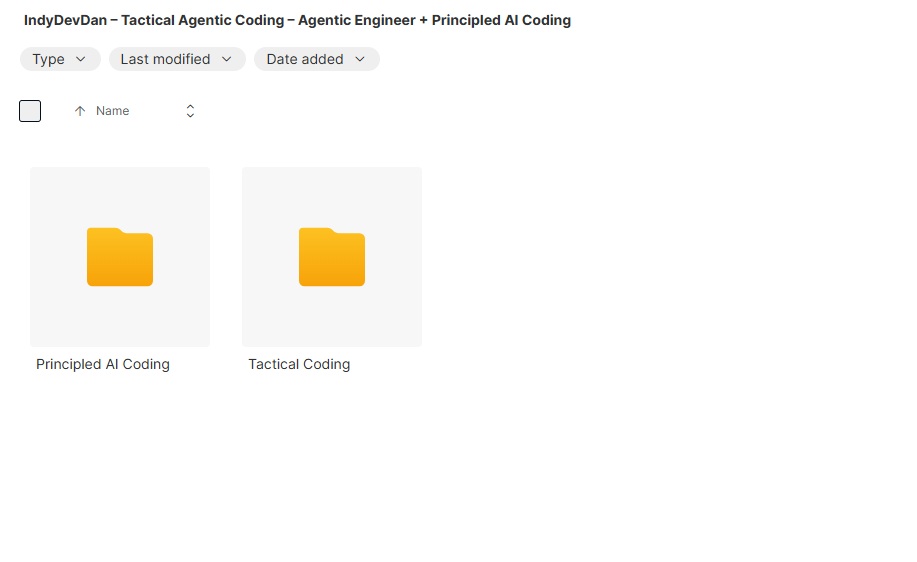
The landscape of software engineering is fundamentally changing, driven by the exponential advancements in Generative AI. This paradigm shift necessitates a re-evaluation of traditional development practices and a proactive adoption of new skill sets. The educational offerings, Principled AI Coding (PAIC) and Tactical Agentic Coding (TAC), are meticulously designed to guide engineers through this critical transition, providing a structured framework to not only adapt but to thrive in the evolving ecosystem. They represent a foresight into the future where the engineer’s role transcends mere code writing.
Overview of the Courses: Principled AI Coding and Tactical Agentic Coding
These two courses, PAIC and TAC, function as a comprehensive two-phase framework. PAIC serves as the foundational stepping stone, equipping all software engineers with the essential principles to effectively collaborate with AI assistants. It focuses on maximizing AI utility for increased productivity and velocity.
Conversely, TAC represents the advanced stage, aimed at experienced developers who are ready to venture beyond AI-assisted coding. It introduces the profound concept of the Agentic Engineer, an individual who orchestrates autonomous AI systems to build and maintain software, thereby achieving unprecedented scales of engineering output.
Significance of These Courses in Modern Software Development
The significance of PAIC and TAC cannot be overstated in an era where traditional, line-by-line coding is rapidly diminishing in relevance. These courses address an urgent need for engineers to pivot from being mere implementers to strategic architects of intelligence-driven systems. They provide a crucial roadmap for navigating the complexities of Generative AI, ensuring that engineers remain indispensable in a world increasingly augmented by artificial intelligence.
By focusing on durable principles over transient tools, the curriculum instills a forward-looking mindset. This approach prepares learners not just for current AI capabilities but also for future iterations, recognizing that while technologies will evolve, the underlying strategic tenets for leveraging them effectively will endure and remain paramount for professional longevity.
Goals and Intended Outcomes for Learners
The primary goal of PAIC is empower engineers to offload the maximum amount of work to AI coding assistants, enabling them to ship products faster and with greater efficiency. Learners will develop productive habits and mental models for interacting with AI, solidifying their role as efficient human-AI collaborators.
For those undertaking TAC, the objective is far more transformative: to cultivate agentic coder**s who can architect self-shipping codebases. These advanced learners will acquire the skills to step **Out of the Loop, commanding fleets of specialized AI agents and encoding their unique expertise into reusable templates, ultimately transitioning from code writers to architects of code-generating systems.
Evolution of Software Engineering in the Age of Generative AI
The advent of Generative AI marks arguably the most significant disruption in the history of software engineering. This is not merely an incremental improvement; it is a fundamental shift that redefines the very essence of what it means to be a software engineer. The traditional craft, steeped in the meticulous construction of code line by line, is yielding to a new paradigm where the engineer’s value lies increasingly in design, architecture, and orchestration rather than direct implementation. Understanding this evolution is crucial for any professional seeking to remain relevant and competitive.
From Traditional Coding to AI-Assisted Development (Phase 1)
Phase 1 represents the initial, impactful shift where engineers leverage AI as a potent assistant. This transition is hailed as the largest productivity multiplier ever introduced to the field. Instead of focusing on how to implement a solution through detailed coding, the engineer’s attention is redirected to what needs to be built – defining clear requirements, desired outcomes, and architectural constraints.
Success in this phase is not about becoming an expert in a specific AI tool or model, but rather about mastering the immutable principles of effective communication with AI. It’s about learning to articulate intent with precision, providing adequate context, and understanding the nuances of how different models interpret and generate code. This foundational skill set allows engineers to maximize AI utility, turning every AI interaction into a high-leverage opportunity for accelerating development cycles and offloading repetitive tasks.
Transitioning to Agentic Engineering (Phase 2)
As the industry progresses, even AI-assisted development (Phase 1) is recognized as a limited approach. Phase 2 introduces Agentic Engineering, recognizing that the human engineer, still directly prompting the AI, becomes the primary bottleneck in scaling software production. This advanced paradigm calls for the emergence of the Agentic Engineer, a role that transcends direct manual prompting. These individuals operate Out of the Loop, designing and deploying autonomous systems composed of multiple specialized AI agents.
This shift means moving beyond simply asking an AI for code. Instead, it involves building sophisticated systems that, in turn, can build and maintain other systems. The ultimate objective is to unlock exponential scales of engineering by creating self-managing agent pipelines. These pipelines are designed to autonomously ship features, execute tests, manage diverse codebases, and even handle deployment with minimal human intervention, thereby revolutionizing the concept of software production.
The Need for a Paradigm Shift: Moving Beyond Line-by-Line Coding
The fundamental argument underpinning this educational framework is the rapid obsolescence of traditional, line-by-line coding. For decades, the craft of software engineering centered on the manual input and meticulous refinement of code. However, Generative AI has demonstrated an unparalleled ability to generate functional code, dramatically shortening development cycles for many tasks. This evolution demands a radical rethinking of the engineer’s role.
The paradigm shift requires engineers to embrace a more strategic, high-level perspective. No longer is the primary value derived from typing code; it comes from designing the systems that generate, test, and maintain code, ensuring their efficiency, reliability, and security. This transformation frees engineers from the tyranny of syntax and boilerplate, allowing them to focus on complex problem-solving, architectural design, and the overarching vision for software products.
Principles and Tactics as Long-Term Foundations
A core tenet spanning both phases of this evolution is the unwavering emphasis on durable principles and robust tactics, rather than fleeting tools or specific AI models. The rapid pace of innovation means that today’s cutting-edge AI model or application may be superseded by tomorrow’s breakthrough. Basing one’s expertise solely on transient technologies creates an unstable professional foundation, vulnerable to rapid obsolescence.
Instead, the focus is on mastering the foundational concepts that underpin all effective interaction with and orchestration of AI. These include principles of context, clear communication, system design, and agentic control. By internalizing these enduring truths, engineers acquire a skillset that remains valuable regardless of technological shifts, enabling them to adapt gracefully to new tools and integrate emerging capabilities seamlessly into their architectural frameworks. This strategic approach ensures long-term career resilience and continuous innovation.
Principled AI Coding (PAIC): Building the Foundations
Principled AI Coding (PAIC) stands as the indispensable gateway for every developer aspiring to navigate the dynamic currents of the new software engineering era. It thoughtfully addresses the immediate need for engineers to adapt their skillset to effectively harness the power of artificial intelligence in their daily workflows. More than just a tool tutorial, PAIC cultivates a profound understanding of how to collaborate with AI, shaping productive habits and establishing robust mental models that will serve developers throughout their careers.
Core Objectives and Learning Goals
The primary aim of PAIC is to equip engineers with the fundamental principles necessary to maximize the volume of work they can confidently offload to their AI Coding Assistant. This involves moving beyond basic prompting to a systematic approach that leverages AI for real, measurable productivity gains. The course empowers learners to transform their workflow from reactive problem-solving to proactive AI collaboration.
The learning goals extend beyond simple interaction; they focus on building a robust framework for sustained efficiency. Learners will gain the ability to accurately assess when and how to deploy AI effectively, understanding AI’s strengths and limitations. This translates into faster product delivery, reduced time spent on repetitive tasks, and ultimately, a more strategic and impactful contribution to their development teams and projects.
Mastering the Big Three: Context, Prompt, and Model
At the heart of PAIC lies the mastery of the “Big Three” foundational pillars: Context, Prompt, and Model. These interconnected elements form the bedrock of successful AI coding. Understanding their synergy is critical to moving beyond rudimentary AI interactions and achieving precision and reliability in AI-assisted development.
Context involves providing the AI with all necessary background information, relevant code snippets, design documents, and project specifications. Without adequate context, even the best prompts can lead to irrelevant or incorrect outputs. Prompt focuses on crafting clear, concise, and unambiguous instructions that precisely communicate the desired outcome to the AI. This includes defining constraints, desired format, and iterative refinement techniques. Finally, Model refers to selecting the appropriate AI model for a given task, understanding that different models excel in different domains or require varying levels of computational resources. This trinity ensures that engineers can consistently generate high-quality, relevant outputs, fostering a stable and scalable AI-assisted workflow.
Target Audience, Prerequisites, and Course Structure
PAIC is meticulously designed to cater to a broad spectrum of software engineers and developers, regardless of their current experience level – from beginner to intermediate to advanced. The course acknowledges that the shift to AI coding is universal and thus offers a comprehensive foundation accessible to all. Its inclusive design ensures that every developer can find value and actionable insights to enhance their professional capabilities, making it a truly democratic educational offering for the engineering community.
To ensure a smooth learning experience, the course has minimal prerequisites. Participants should possess basic programming knowledge, understanding the fundamentals of code logic and structure. Familiarity with git for version control and basic terminal commands is also expected, as these are common tools in modern software development. Crucially, no prior AI coding experience is required, making PAIC the ideal entry point for anyone looking to step into the world of AI-driven development. The course is thoughtfully structured into 8 progressive lessons, building foundational skills and mental models from the ground up.
Curriculum Breakdown: From Basic Prompts to Advanced Strategies
The PAIC curriculum is an intelligently structured journey, evolving from fundamental concepts to sophisticated AI coding strategies. It begins with “Hello AI Coding World,” guiding learners through installation, configuration, and their very first successful prompts, establishing immediate hands-on experience and demystifying the initial setup. This practical start ensures that participants gain confidence early on, seeing tangible results of their AI collaborations.
As the course progresses, it delves into critical topics like “Multi-File Editing: STOP coding, START prompting,” encouraging a shift in mindset from manual intervention to AI orchestration. Lessons on “Know your IDKs: Crafting the PERFECT Prompt” and “How to Suck at AI Coding: Common Pitfalls” provide invaluable insights into optimal prompting techniques and error avoidance. More advanced modules, such as “Spec based AI Coding with Reasoning Models” and “Aider Has a Secret,” unveil powerful methodologies for complex problem-solving and leveraging advanced AI behaviors. The journey culminates in modules like “Let the code write itself” and “Principled AI Coding,” solidifying the advanced techniques and philosophical underpinnings required to consistently achieve high-level AI-driven productivity within a robust framework.
Practical Application: Enhancing Productivity and Consistency
The core philosophy of PAIC is rooted in practical application, aiming not just to teach theory but to fundamentally transform daily coding practices. The course provides actionable strategies that enable engineers to immediately enhance their productivity by effectively offloading significant portions of their work to AI. This means less time spent on boilerplate code, repetitive refactoring, or debugging minor syntax errors, and more time dedicated to higher-level problem-solving and innovative design, thereby accelerating development cycles.
Beyond mere speed, PAIC emphasizes consistency in AI output. By mastering the Big Three (Context, Prompt, and Model), engineers learn to elicit predictable and reliable responses from their AI assistants. This predictability reduces unexpected errors and rework, ensuring that the code generated by AI aligns closely with project requirements and best practices. The result is a more streamlined, efficient, and dependable development workflow, where AI becomes a true partner in achieving consistent, high-quality software delivery.
Tactical Agentic Coding (TAC): Advancing to Autonomous Systems
Tactical Agentic Coding (TAC) stands as the advanced frontier in modern software engineering, pushing beyond mere AI assistance to architect fully autonomous, agent-driven systems. It is not just an upgrade to traditional AI coding but a paradigm shift, positioning the developer as a strategic orchestrator rather than a direct code implementer. This course challenges experienced engineers to reimagine their role, moving from interacting with single AI models to designing entire ecosystems where intelligence is distributed, specialized, and self-organizing. It is about building systems that build systems, a truly revolutionary concept.
Core Mission and Key Concepts
The paramount mission of TAC is to transform a developer into an Agentic Engineer – an engineer so indispensable that “THEY CAN’T REPLACE” them. This profound transformation is achieved by mastering the tactics of Agentic Coding, shifting the focus from individual code contributions to architecting systems where the codebase possesses the capability to ship itself. This involves designing self-managing, self-correcting software development pipelines.
Key concepts in TAC revolve around the profound idea of stepping Out of the Loop. This means relinquishing direct, minute-by-minute interaction with the coding process and instead designing higher-level directives and feedback mechanisms that empower autonomous agents to execute complex development tasks. It’s about building a meta-system that not only generates code but also tests, integrates, and deploys it, all while adhering to predefined architectural patterns and quality standards. This empowers engineers to elevate their role to that of a system architect and strategic overseer, rather than a hands-on coder.
The Core Four: Extending the Big Three with Tools
Building upon PAIC’s foundational “Big Three” (Context, Prompt, Model), TAC introduces “The Core Four” by integrating Tools as a critical fourth pillar. While Context, Prompt, and Model provide the intellectual framework for instructing AI, Tools equip AI agents with the means to act in the real world. Tools can include access to compilers, debuggers, version control systems, external APIs, databases, or even the ability to browse the internet.
The inclusion of Tools is transformative because it enables AI agents to move beyond mere text generation. With Tools, agents can execute code, retrieve information from external sources, interact with existing software systems, and perform actions that affect the environment outside their linguistic model. This significantly expands the scope and autonomy of AI agents, allowing them to perform complex, multi-step tasks that require interaction with real-world development environments, turning them into truly **agentic coder**s capable of executing an entire workflow. This strategic addition empowers agents to perform real-world actions, such as running tests, committing code, or fetching data, thereby elevating their capabilities from purely generative to truly executive functions.
AI Developer Workflows (ADWs): Automating Entire Pipelines
A central tenet of Tactical Agentic Coding is the design and implementation of AI Developer Workflows (ADWs). These are not merely scripts or automated tasks; they are sophisticated, multi-agent pipelines orchestrated to perform entire segments of the software development lifecycle autonomously. An ADW might, for instance, take a feature request, break it down, write new code, generate tests, run those tests, commit the code to version control, and even prepare it for deployment, all without continuous human intervention.
ADWs represent a profound leap in engineering productivity. By defining these workflows, **Agentic Engineer**s can effectively encode their expertise and best practices into reusable, self-executing systems. This allows for the exponential scaling of engineering output, as a single engineer can manage and observe multiple concurrent ADWs handling different projects or features. The strategic design of ADWs also ensures consistency, enforces standards, and drastically reduces the potential for human error in repetitive yet critical development tasks.
Templating Over Coding: Encapsulating Expertise into Reusable Frameworks
In the realm of Tactical Agentic Coding, the focus shifts dramatically from directly writing code to creating robust templates. These templates are not just simple boilerplate; they are sophisticated frameworks that encapsulate an engineer’s deep expertise, architectural patterns, and development best practices into reusable components that AI agents can utilize. Instead of generating code line by line, the Agentic Engineer designs the blueprints from which intelligent agents can manifest full-fledged applications or features.
This approach significantly amplifies an engineer’s leverage. By abstracting away the implementation details into configurable templates, an engineer can exert influence over vast swaths of code generation with a few high-level directives. This paradigm also fosters consistency across projects, accelerates onboarding for new team members by providing standardized building blocks, and ensures that generated code adheres to specific quality and architectural standards, thereby transforming individual expertise into a scalable, systemic asset.
The 12 Leverage Points: Maximizing Agent Autonomy and Effectiveness
TAC introduces the concept of the “12 Leverage Points,” a strategic framework designed to systematically maximize the autonomy and effectiveness of AI agents. These leverage points are critical areas where an Agentic Engineer can exert influence to optimize agent performance, reduce human intervention, and enhance the overall efficiency of autonomous systems. They encompass a range of considerations, from initial agent configuration and goal setting to advanced debugging and self-correction mechanisms.
Understanding and applying these leverage points allows engineers to move beyond reactive prompting to proactive system design. It involves principles such as defining clear objectives, selecting appropriate tools for agents, establishing robust feedback loops, managing memory and state, and implementing effective error handling. By meticulously tuning each of these points, engineers can architect highly resilient and intelligent agent pipelines that are capable of navigating complex development challenges with minimal oversight, significantly increasing their productivity and the reliability of their autonomous systems.
Target Audience, Prerequisites, and Course Content
Tactical Agentic Coding (TAC) is specifically tailored for senior developers and experienced engineers who have already mastered the foundational principles of AI-assisted coding, as taught in PAIC. This is not an entry-level course; it demands a solid understanding of software architecture, system design, and the intricacies of complex development workflows. The audience is comprised of forward-thinking individuals ready to transcend traditional coding and step into the architecture of autonomous systems.
Prerequisites for TAC are substantial: completion of PAIC or an equivalent deep understanding of effective AI Principled AI Coding, strong programming skills across multiple languages, extensive experience with enterprise-level software development, and a keen interest in designing highly scalable, maintainable, and self-managing systems. The course content is advanced, diving into multi-agent orchestration, complex ADW design, advanced templating, and strategic oversight of autonomous code generation.
Curriculum Highlights and Upgradable Modules: From Basic to Expert Skills
The curriculum of Tactical Agentic Coding is structured as an intensive journey from foundational agentic coder concepts to advanced, expert-level strategies. It initially guides learners through the core theory of agentic design, establishing the mental models required to conceptualize autonomous systems. Early modules focus on understanding the “Core Four” and designing rudimentary AI Developer Workflows, building a strong conceptual and practical base for controlling intelligent agents.
As the curriculum progresses, it delves into complex topics such as orchestrating fleets of specialized agents, implementing sophisticated templating for diverse project types, and applying the 12 Leverage Points to fine-tune agent behavior and autonomy. The course is designed with upgradable modules, allowing continuous integration of cutting-edge research and industry best practices. This ensures that learners are always at the forefront of phase 5 tactical autonomous engineering, equipping them with the knowledge to design and manage systems capable of increasingly intricate and sophisticated self-shipping and self-maintaining capabilities, preparing them for the most challenging and innovative engineering roles of the future.
Out of the Loop: Command Fleets of AI Agents and Autonomous Codebases
The phrase “Out of the Loop” in the context of Tactical Agentic Coding signifies a profound shift in the engineer’s operational model. It means moving beyond a direct, continuous engagement with every line of code or every prompt response. Instead, the Agentic Engineer designs overarching systems, sets high-level objectives, and then empowers fleets of specialized AI agents to execute the intricate details of software development autonomously. This is not about disengagement, but about elevating one’s position to a meta-level of oversight and strategic architecture, enabling scalability and freeing human intellect for more complex, creative challenges.
Understanding the Concept and Its Significance
Being Out of the Loop in Agentic Engineering fundamentally redefines the relationship between human and machine. It implies a transition from a hands-on, imperative style of programming to a declarative, orchestrative approach. Rather than dictating every step, the engineer sets the end goal, defines the constraints, and designs the intelligent self-organizing systems that will achieve that goal. This concept is immensely significant because it addresses the inherent limitations of human scalability in software development.
The core significance lies in breaking the direct human-bottleneck. When an engineer is Out of the Loop, their productivity is no longer limited by their typing speed or individual cognitive capacity for micro-level task management. Instead, they leverage the parallel processing power and tireless execution of multiple AI agents, multiplying their output exponentially. This allows engineers to supervise entire project lifecycles or manage multiple projects concurrently, shifting their focus from execution to strategic design, monitoring, and refinement of the autonomous systems themselves.
Strategies for Managing Multiple Agents and Workflows
Effectively managing multiple AI agents and complex workflows necessitates sophisticated strategic approaches, going far beyond simple sequential tasking. The Agentic Engineer acts as a grand orchestrator, designing architectures where agents can communicate, collaborate, and hand off tasks seamlessly. This involves defining clear roles for each specialized agent, establishing robust communication protocols, and implementing hierarchical control structures that allow for both autonomy and overall direction.
Key strategies include the development of a central coordination mechanism or a “meta-agent” that supervises the fleet, assigns tasks based on defined objectives, and resolves conflicts between agents. Implementing robust feedback loops is also crucial, enabling agents to self-correct and learn from outcomes. Furthermore, designing modular workflows allows for flexibility and resilience, where individual agent failures or changes can be managed without cascading impacts across the entire system. This systematic management ensures that the collective intelligence of the agent fleet is harnessed efficiently, achieving complex goals with minimal human intervention.
Building Self-Shipping and Self-Maintaining Systems
The ultimate aspiration of Tactical Agentic Coding and operating Out of the Loop is the creation of software systems that are not only self-generating but also self-shipping and self-maintaining. This means designing an architecture where AI agents can take a high-level feature request, translate it into code, implement it, test it, integrate it with existing codebases, deploy it to production, and then continuously monitor and fix issues, all without human developers needing to intervene at every stage.
To achieve this, engineers must embed intelligence at every layer of the development pipeline. This involves agents capable of understanding version control, CI/CD pipelines, monitoring systems, and incident response mechanisms. Such systems embody a closed-loop intelligence, capable of evolving and repairing themselves, significantly reducing operational overhead and accelerating the pace of innovation. The focus becomes crafting robust, adaptable blueprints and feedback loops rather than direct hands-on management.
Challenges and Ethical Considerations in Autonomous Engineering
While the promise of autonomous engineering is immense, it comes with significant challenges and ethical considerations that must be meticulously addressed. One primary challenge is ensuring the reliability and correctness of code generated and maintained by AI agents. Bugs or security vulnerabilities introduced by autonomous systems can have far-reaching consequences, necessitating sophisticated validation and verification mechanisms that include human oversight in critical junctures.
Ethical considerations are paramount when operating Out of the Loop. Issues such as bias embedded in training data leading to discriminatory code, or the potential for autonomous systems to make decisions without clear human accountability, require careful ethical frameworks. Ensuring transparency in agent decision-making, establishing clear lines of responsibility, and designing for human-in-the-loop interventions for critical decisions are essential. Furthermore, the societal impact of job displacement and the need for continuous upskilling of the workforce must be proactively managed as these technologies become more prevalent.
Norm the Genie and Non-Agentic Meaning: Shaping AI Behavior
The concept of “norm the genie” is an insightful metaphor coined to describe the critical process of establishing boundaries, expectations, and guiding principles for AI systems, particularly autonomous agents. Just as a genie, once released, might interpret wishes literally or in unintended ways, an unconstrained AI agent can operate beyond desired parameters. Therefore, “norm the genie” encapsulates the essential task of an Agentic Engineer to rigorously define the ethical, functional, and operational envelope within which AI agents must operate. This ensures that their autonomy serves beneficial, controlled purposes.
Defining “Norm the Genie”: Establishing Boundaries and Expectations
To “norm the genie” means to provide AI agents with a comprehensive set of constraints, guidelines, and an explicit ethos that governs their behavior. This goes beyond simple prompting; it involves baking ethical principles, performance targets, security policies, and architectural standards directly into the agent’s design and operational framework. It’s about proactive governance, ensuring that the AI’s autonomy is harnessed for predictable and desirable outcomes, preventing unintended consequences.
This process involves defining what the agent can do, should not do, and must do in various scenarios. It uses a combination of meta-prompts, pre-defined tools with restricted access, and robust evaluation metrics that continuously monitor and steer agent behavior. By effectively “norming the genie,” Agentic Engineer**s transform a potentially unpredictable autonomous system into a reliable and trustworthy partner, aligned with human intent and organizational values, ensuring that an **agentic coder remains within ethical boundaries.
Differentiating Agentic and Non-Agentic AI Systems
Understanding the distinction between agentic and non-agentic AI systems is fundamental to Tactical Agentic Coding. A non-agentic meaning defines an AI system that primarily acts as a reactive tool, performing tasks directly in response to a specific human prompt or command. Think of a simple code generator that provides a snippet based on your immediate request – it has no initiative, long-term memory, or ability to plan multi-step actions or interact with its environment autonomously.
Conversely, an agentic AI system possesses a higher degree of autonomy, initiative, and goal-directed behavior. It can maintain internal state, perceive its environment (e.g., a codebase, a development pipeline), plan sequences of actions over time, utilize tools to interact with that environment, and self-correct based on feedback to achieve larger, abstract goals. This distinction is critical because Tactical Agentic Coding focuses exclusively on building and orchestrating these truly agentic systems, unlocking exponential leverage that non-agentic tools simply cannot provide.
Practical Implications for Code Safety and Reliability
The distinction between agentic and non-agentic AI has profound practical implications, especially for code safety and reliability. In non-agentic systems, the human engineer bears the full responsibility for validating every output and ensuring its safety. Any error or oversight is a direct consequence of human failure to adequately check the AI’s suggestion. This can be time-consuming and prone to human error, despite the assistant’s helpfulness.
For agentic systems, the implications are more complex, requiring sophisticated control mechanisms. While agents can proactively identify and fix bugs, they can also autonomously introduce issues or make suboptimal decisions if not properly “normed the genie.” Therefore, robust safety protocols, extensive testing frameworks, and continuousmonitoring systems must be integrated into the development lifecycle to mitigate risks. This ensures that any agentic code produced not only meets quality standards but also adheres to ethical considerations and operational guidelines. Implementing layered checks, such as peer reviews or automated audits, becomes essential in fostering trust in autonomous systems and enhancing their reliability.
Furthermore, the practical implications extend beyond mere safety; they encompass the broader scope of maintaining an accountable AI environment. As agentic engineers work with increasingly sophisticated systems, they must establish clear protocols and governance frameworks that dictate how these systems can operate autonomously while ensuring they remain aligned with human oversight. This balance is vital for constructing a robust architecture where both innovation and accountability coexist, enabling seamless collaboration between human and machine intelligence.
The Loop on Greenfield Projects: Navigating New Development Environments
The concept of “the loop on greenfield” projects provides a unique opportunity for deploying Tactical Agentic Coding strategies without the constraints of legacy systems. In software development, greenfield projects refer to initiatives that begin from scratch, allowing teams to design and implement systems unfettered by existing architectures or technical debt. This clean slate approach is particularly advantageous in deploying agentic principles, as it allows developers to incorporate cutting-edge methodologies from the outset.
Concept and Benefits of Starting from a Greenfield
Starting a project in a greenfield environment opens up endless possibilities for innovation. Since no existing framework dictates choices, teams can thoughtfully select technologies, architectures, and practices that foster agentic behaviors. This flexibility enables the introduction of autonomous agents that can define workflows, adapt to changing requirements, and evolve based on feedback loops inherent to agile development processes.
Moreover, the advantages of greenfield projects are amplified when combining them with the principles of Tactical Agentic Coding. By embedding intelligent, self-sustaining capabilities into the very fabric of the application, teams can ensure rapid delivery and continuous enhancement of functionalities. The result is a system capable of self-optimizing, responding dynamically to user needs while minimizing manual intervention—a significant leap toward efficiency and responsiveness.
The Loop: Continuous Feedback and Optimization Cycles
In the context of greenfield projects, “the loop” refers to the continuous cycle of feedback and optimization that drives iterative development. This method involves gathering insights from users, analyzing performance metrics, and utilizing this information to refine and enhance the system over time. Agentic engineers play a crucial role in establishing these feedback loops, leveraging agentic coding principles to facilitate real-time adaptations and adjustments based on data-driven outcomes.
By implementing robust monitoring and analytics tools, project teams can maintain a pulse on system performance and user engagement. These insights inform proactive decision-making and enable the self-adjustment of AI agents operating within the system, leading to enhanced functionality and user satisfaction. The seamless integration of these feedback mechanisms propels the project forward, ensuring that improvements are not only reactive but also anticipatory, embodying the essence of true autonomy.
Phase 5 Tactical: Next-Level Autonomous Engineering Strategies
As technology continues to evolve, understanding the next level of autonomous engineering strategies becomes paramount. Phase 5 Tactical reflects an advanced stage where teams leverage intricate multi-agent systems to orchestrate complex tasks seamlessly. This phase transcends basic automation, integrating sophisticated AI agents capable of collaborating, learning, and adapting collectively to achieve overarching objectives.
Emerging Trends and Innovations
Emerging trends in Phase 5 Tactical reveal a landscape rich with innovation. One significant trend is the rise of decentralized autonomous organizations (DAOs), which utilize blockchain technology to facilitate governance among multiple AI agents. This model enhances transparency and accountability while enabling autonomous decision-making across diverse functions, such as resource allocation and project management.
Additionally, the integration of edge computing further amplifies the capabilities of agentic systems. By processing data closer to its source, edge computing reduces latency and enables real-time decision-making, which is especially beneficial for applications requiring immediacy, such as IoT devices. These innovations contribute to more resilient and responsive systems—fundamental qualities for engineers navigating the complexities of modern software development.
Integrating Multi-Agent Systems and Orchestration
The ability to manage and integrate multi-agent systems represents a pivotal development in Tactical Agentic Coding. By leveraging orchestration techniques, teams can create harmonious interactions between various agents, enabling them to tackle complex challenges collaboratively. This collaborative capacity allows for distributed problem-solving, reducing bottlenecks and accelerating project timelines.
To effectively harness the potential of multi-agent systems, agentic engineers must develop sophisticated orchestration frameworks that facilitate communication, coordination, and conflict resolution among agents. Ensuring that all agents function synergistically requires precise definitions of roles, responsibilities, and interaction protocols. As teams mature in their capabilities, they will unlock opportunities for unprecedented efficiencies, scalability, and adaptability in software engineering.
Out of the Loop: Significance and Applications in Modern Engineering
Understanding the significance of being out of the loop serves as a crucial theme in modern engineering discussions, especially concerning the deployment of autonomous systems. This phrase captures the essence of delegating decision-making and operational control to AI agents, granting them the independence needed to execute tasks without constant human oversight.
Clarifying the Meaning and Contexts of Being Out of the Loop
Being out of the loop translates to embracing a paradigm shift where human developers take on a supervisory role rather than hands-on execution. In this context, engineers design systems that strategically minimize direct involvement, allowing AI agents to operate autonomously. This transition requires a cultural and operational mindset change, encouraging teams to trust the capabilities of their AI companions while still maintaining accountability through well-defined boundaries and oversight mechanisms.
The contexts for being out of the loop vary depending on the complexity and criticality of engineering tasks. For instance, routine maintenance activities may lend themselves well to full autonomy, whereas high-stakes deployments necessitate a carefully calibrated balance of human input and agentic oversight. Establishing this equilibrium ensures that innovation thrives alongside responsible engineering practices.
Benefits of Autonomous, Agent-Driven Systems
The benefits of adopting an out of the loop strategy are manifold, particularly regarding increased efficiency and productivity. By empowering AI agents to handle repetitive and lower-level tasks, human engineers can focus on higher-order responsibilities that require creativity, strategic thinking, and deep domain knowledge. In this way, the role of the agentic engineer evolves from one of execution to that of architecting and governing systems, ultimately driving greater value to the organization.
Additionally, autonomous systems equipped with Tactical Agentic Coding principles can quickly adapt to changes in requirements or environments, providing unparalleled agility and responsiveness. As organizations embrace these advancements, they position themselves at the forefront of innovation, leveraging the synergy between human expertise and agent-driven capabilities for exceptional results.
Conclusion
In summary, the evolution towards autonomous coding paradigms, as exemplified through courses like Principled AI Coding and Tactical Agentic Coding, marks a transformative shift in software development. By equipping engineers with the skills to navigate this landscape, we empower them to become agentic coders, capable of designing systems that prioritize autonomy and self-sustainability. This journey involves cultivating an understanding of norm the genie guidelines, differentiating between agentic and non-agentic systems, and embracing the innovative potential of multi-agent orchestration. Ultimately, the future lies in preparing for the role of the agentic engineer, continuously learning and adapting to thrive in the generative AI era.
Sales Page: _https://agenticengineer.com/tactical-agentic-coding & _https://agenticengineer.com/principled-ai-coding