
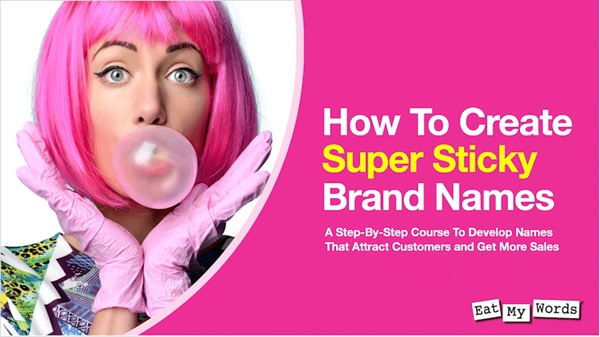
[GroupBuy] Super Sticky Brand Names – Alexandra Watkins
$25.00
Discount 20% if your total cart over $150
- Satisfaction Guaranteed
- Fast and forever download link
- Secure Payments
- Reupload FREE
Description
Embarking on naming courses can demystify the creation of powerful, memorable brand identities, transforming a traditionally frustrating task into a strategic, repeatable, and highly effective methodology. This structured learning approach provides the tools and insights needed to craft names that truly resonate and drive commercial success.
Naming Courses
The journey to developing a “Super Sticky” brand name, as championed by Alexandra Watkins, the visionary behind Eat My Words, transcends mere creativity; it’s a disciplined methodology. Naming courses built around this framework offer an invaluable opportunity to master a professional, replicable process for brand identity creation. Gone are the days of aimless brainstorming sessions and subjective dead-ends. This structured approach, rooted in 15 years of industry-tested experience and millions in generated revenue, provides a roadmap to names that not only capture attention but also forge deep connections with consumers.
Participants in such courses learn to navigate the intricate landscape of brand semantics, avoiding common pitfalls while leveraging psychological triggers that foster instant recognition and affinity. The curriculum typically dissects the critical components of a successful name, moving from broad strokes to granular details, ensuring every attribute contributes to a cohesive, impactful brand presence. From initial strategic planning to the final selection and domain acquisition, each step is meticulously covered, transforming novices into adept naming strategists capable of delivering bulletproof brand identities.
The SMILE Framework: Pillars of Persuasion
The SMILE Framework forms the bedrock of an effective brand naming strategy, representing five essential qualities that ensure a name is not just a label, but a magnetic force drawing consumers in. Each of these attributes—Suggestive, Memorable, Imagery, Legs, and Emotional—plays a pivotal role in creating names that achieve “love-at-first-sight status.” Learning to apply this framework systematically is a core component of any comprehensive naming course, enabling students to evaluate and refine potential names against a clear, objective standard. It moves beyond gut feelings, offering a measurable way to assess a name’s potential to embed itself in the consumer’s mind and evoke desired responses.
A name’s ‘Suggestive’ quality means it subtly hints at what the brand or product offers without being overtly descriptive, creating an intriguing enigma that invites further exploration. For instance, “Retriever” for a GPS for dogs smartly suggests its function. ‘Memorable’ names are inherently simple, easy to pronounce, and often rhythmic, ensuring they stick in the consumer’s memory long after the initial encounter. Think of how “Neato” immediately comes to mind when you picture a robotic vacuum. The ‘Imagery’ aspect is crucial, as visual associations can trigger powerful cognitive responses. Names that paint a vivid mental picture, like “The Church of Cupcakes,” leverage this human tendency for visual processing, making the brand more engaging and unique.
‘Legs’ refers to a name’s versatility and its capacity to expand with the brand, supporting future product lines or thematic extensions without feeling restrictive. A name with good ‘Legs’ can adapt and evolve, growing alongside the brand’s innovation and market expansion. Finally, ‘Emotional’ names are those that tap into feelings, desires, or aspirations, creating an immediate, visceral connection with the audience. “Wendy’s Baconator” might not evoke deep emotion but certainly ignites a feeling of indulgent satisfaction. Mastering these interconnected qualities allows creators to develop names that are not only aesthetically pleasing but are also strategically potent, primed for market penetration and sustained success.
Navigating the 7 Deadly Dealbreakers: Risk Mitigation in Naming
Beyond constructing winning names with the SMILE framework, a critical component of professional naming, intensely covered in specialized naming courses, involves understanding and proactively avoiding the “7 deadly dealbreakers.” These hazards are common amateur mistakes that can actively harm a brand, repel potential customers, and lead to costly legal or marketing repercussions. Identifying these pitfalls before they manifest is paramount for creating bullet-proof names that stand the test of time and market scrutiny. This risk mitigation strategy is not merely about avoiding bad outcomes; it’s about safeguarding brand reputation and maximizing commercial viability.
The dealbreakers often encompass issues like names that are difficult to pronounce, leading to customer confusion and marketing friction; names that are generic or easily confused with competitors, diluting brand distinctiveness; or names that carry unintended negative connotations in different languages or cultures, potentially causing public relations disasters. For instance, a name that sounds great in English might translate to something offensive elsewhere. Moreover, legal pitfalls, such as trademark infringements or severe domain name conflicts, can derail even the most innovative branding efforts. Naming courses typically dedicate significant attention to teaching participants specific search and validation techniques to unearth such issues early in the process, providing them with the foresight to pivot or refine names before substantial investments are made.
One of the most persistent challenges is overcoming “domain name pain,” the struggle to find available and affordable online real estate for a chosen brand name. Professional methodologies, as taught in these courses, include specific strategies and tools to offer creative alternatives to secure an online presence without excessive expenditure. This might involve exploring alternative top-level domains (TLDs), using creative prefaces or suffixes, or leveraging brand extension strategies that don’t solely rely on a perfect “.com” match. Furthermore, for existing brands considering a refresh, the curriculum often includes a “Name Change Rebrand Checklist,” a structured approach to evaluate the pros and cons of a transition, ensuring any rebranding effort is strategic, justified, and seamlessly executed. This comprehensive approach to risk mitigation is what elevates professional naming beyond mere artistic endeavor into a meticulous, strategic science.
The Professional Naming Methodology: From Dead-End to Idea Machine
The transition from hitting a creative dead-end to becoming an “idea machine” in naming is not achieved through innate genius alone but via a structured, step-by-step methodology. This professional roadmap, a cornerstone of advanced naming courses, replaces reliance on sporadic inspiration with a reliable, repeatable process. It ensures that creativity is channeled strategically, eliminating guesswork and dramatically increasing efficiency. At the heart of this methodology lies the Creative Brief and the application of specialized brainstorming tools. These elements work in concert to focus efforts, generate high volumes of viable options, and resolve critical conflicts early in the branding lifecycle.
The foundation of any project is the Creative Brief, a document whose template is rigorously employed by agencies like Eat My Words. This brief is more than a simple questionnaire; it’s a strategic blueprint that defines and develops the brand identity with unparalleled clarity. It forces teams to articulate strategic priorities, target audience insights, brand personality, and competitive differentiators, effectively preparing the entire team for focused, effective brainstorming. By meticulously outlining “who, what, where, why, and how” of the brand, the brief ensures that all naming efforts are aligned with overarching business objectives. This initial, often understated, step is crucial for preventing misaligned creative efforts and ensuring that every generated name serves a specific strategic purpose.
Following a robust Creative Brief, the methodology moves into structured brainstorming and creativity tools. Professional naming utilizes specific “secrets” to generate high volumes of names quickly and efficiently. These include “Online Mining” techniques, which involve extracting ideas from vast online resources—ranging from dictionaries and thesauruses to industry-specific terminology and cultural phenomena. Another critical technique is “Coining Names,” where participants learn methods for creating original words or combinations, offering truly unique brand identifiers. The focus here is on immediate, practical application rather than theoretical exercises. These tools are designed to save time and money, transforming what is often a frustrating, time-consuming task into a streamlined, productive exercise. By embedding these techniques within a structured methodology, naming courses empower individuals and teams to consistently generate a diverse array of strategically sound and legally viable names.
Creative Names for Social Media Monetization Course
Developing creative names for social media monetization course presents a unique challenge, merging the dynamic, often informal world of social media with the more formal, results-driven domain of finance and business education. The goal is to craft a name that is not only catchy and memorable but also clearly communicates the course’s value proposition: teaching individuals how to generate income from their online presence. Such names must inspire trust and credibility while hinting at innovation and the potential for financial growth. A well-chosen name can significantly impact enrollment rates, distinguishing the course from a burgeoning market of similar offerings. It needs to reflect both the playful, accessible nature of social media and the serious, strategic aspects of monetization, effectively bridging these two distinct spheres. The process demands a deep understanding of the target audience, their aspirations, and the specific jargon or emotional triggers that resonate with them, ensuring the name is both appealing and informative.
SMILE for Monetization: Crafting Impactful Course Titles
Applying the SMILE Framework to generate creative names for social media monetization course can transform generic titles into compelling propositions. Each of the five qualities—Suggestive, Memorable, Imagery, Legs, and Emotional—must be carefully considered to create a name that stands out in a crowded digital learning landscape. The specific context of social media monetization demands names that promise tangible results and empowerment, without resorting to hyperbole or sounding overly technical. This application encourages a more nuanced approach to branding education, making the course name itself a case study in effective branding.
For the ‘Suggestive’ quality, the name should hint at the outcome or method of social media monetization. Instead of “Social Media Income Basics,” consider something like “Digital Harvest Pro” or “Influence to Income Academy.” These names immediately suggest a process of yielding returns from digital presence. ‘Memorable’ names are short, easy to say, and often have a unique rhythm. Avoid long, convoluted phrases that are hard to recall. “CashClick” or “ViralVault” are concise and sticky. ‘Imagery’ is crucial; the name should conjure a visual of success or opportunity. “Gold Mine Grams” creates an immediate picture of wealth from Instagram, while “StreamRiches” paints a picture of flowing income from live content.
A name with good ‘Legs’ can adapt as social media platforms evolve or as new monetization strategies emerge. It shouldn’t be tied too specifically to one platform or method. “Content Currency Creator” has ‘Legs’ as it applies across various content types and platforms. Finally, ‘Emotional’ names establish an immediate connection. They tap into the desire for financial independence, freedom, or mastery. “Financial Freedom Flicks” evokes aspirations of liberation, while “Empower Your Digital Empire” speaks to personal growth and control. By systematically applying the SMILE framework, course creators can move beyond functional descriptions to craft names that are magnetic, aspirational, and genuinely “Super Sticky” for their target audience, turning a simple title into a powerful marketing asset.
Avoiding Brand Hazards in Course Naming: The Seven Dealbreakers
When conceptualizing creative names for social media monetization course, rigorously avoiding the “7 deadly dealbreakers” is as critical as applying the SMILE framework. These potential pitfalls can severely undermine a course’s credibility, repel potential students, or lead to legal and marketing headaches, even for seemingly innocuous names. In the realm of online education, where trust and clarity are paramount, neglecting these hazards can be particularly damaging, making a well-intentioned course name inadvertently counterproductive. This process of identifying and mitigating risks ensures the chosen name is robust, professional, and free from any hidden liabilities.
One significant dealbreaker is selecting a name that is generic or indistinguishable from competitors. In a market flooded with courses promising social media income, a name like “Social Media Money Course” will simply vanish into the background. It lacks distinctiveness and makes it challenging for prospective students to differentiate. Another hazard involves names that are difficult to pronounce or spell, which creates barriers to word-of-mouth marketing and search engine visibility. Imagine trying to tell a friend about “KryptoKashflowXperience” – the friction instantly hinders adoption. Similarly, names with negative connotations or unintended meanings in different linguistic contexts, even subtle ones, can inadvertently alienate parts of a global audience, or simply sound unappealing.
Furthermore, legal considerations like potential trademark infringement are paramount. Before finalizing any name for a social media monetization course, a thorough search for existing trademarks is essential to avoid costly disputes down the line. Using a common phrase or a modified version of a registered brand name is a major risk that some amateur course creators overlook. Finally, the availability of a suitable domain name and social media handles is non-negotiable in the digital learning space. A fantastic course name that can’t secure a matching, intuitive online presence is a marketing liability. The professional naming methodology would proactively address these points by emphasizing comprehensive checks and creative solutions, such as exploring unique domain extensions or slight variations, ensuring the chosen name is not only appealing but also viable and legally sound across all digital touchpoints.
Strategic Tools for Course Name Generation: The Creative Brief and Online Mining
The systematic development of creative names for social media monetization course transitions from a hopeful ideation to a focused, productive endeavor through the application of strategic tools like the Creative Brief and advanced online mining techniques. This structured approach, a hallmark of professional naming, transforms guesswork into a guided process, dramatically increasing the quality and quantity of viable name options. It underscores the principle that effective naming is more about strategic planning and efficient execution than raw, untamed creativity.
The Creative Brief serves as the indispensable foundation. For a social media monetization course, this document meticulously defines the target audience (e.g., aspiring influencers, small business owners), the course’s unique selling proposition (e.g., rapid growth, passive income strategies, ethical monetization), its tone (e.g., educational, inspiring, practical), and competitive landscape. It also identifies desired emotional responses and any constraints (e.g., specific platforms not covered, price point implications). By distilling these strategic elements, the brief ensures that all subsequent naming efforts are laser-focused, preventing the generation of names that, while creative, might miss the strategic mark or fail to resonate with the intended learner. For instance, if the brief emphasizes “accessible and beginner-friendly,” names like “Apex Monetization Blueprint” might be too intimidating, whereas “Spark Social Income” would be more aligned.
| Quality/Type | Description | Example for Social Media Monetization Course | Why it Works |
|---|---|---|---|
| Suggestive | Evokes something about the brand/product. | “Digital Dividends Hub” | Hints at financial returns from digital activity. |
| Memorable | Easy to recall, sticks in mind. | “Profit Post” | Short, alliterative, and directly relates to content and income. |
| Imagery | Creates a mental picture or visual association. | “Content Cartel Cash” | Visual of powerful, collective income generation. |
| Legs | Ability to grow with the brand/support a theme. | “Influence Engine Program” | Can expand to different platforms or new strategies over time. |
| Emotional | Establishes a connection or feeling. | “Freedom Feed Formula” | Taps into the desire for independence and control over one’s income. |
| Dealbreaker Avoidance | Avoids generic, hard to pronounce, negative, or infringing names. | (Example of avoidance) “Not ‘Make Money Online Fast'” | Generic, often associated with scams; avoids such connotations. |
Following the brief, professional naming leverages advanced “Online Mining” techniques, specifically tailored to generate a wealth of name options. This involves systematic exploration of relevant keywords, industry-specific terminology, and creative linguistic sources. For a social media monetization course, this might include: delving into synonyms for “profit,” “income,” “digital,” “influence,” and “growth”; exploring social media slang and contemporary cultural terms; using online tools to generate word combinations, portmanteaux, or even short, punchy phrases. The emphasis is on generating a high volume of diverse options quickly, moving beyond obvious choices. For example, using a thesaurus to find alternatives for “income” might yield “returns,” “yield,” “revenue,” “dividends,” or “gains,” which can then be combined with social media terms like “stream,” “feed,” “post,” or “spark.” This structured blend of strategic planning and creative tool usage ensures that the generated names are not only original and impactful but also deeply aligned with the course’s objectives and target audience, ultimately enhancing its market appeal and success.
Conclusion
The architecture of a successful brand name, whether for a global corporation or a specialized social media monetization course, is meticulously built on a robust framework that marries strategic focus, creative excellence, and astute risk management. By adopting a professional roadmap guided by comprehensive naming courses, organizations and individuals can bypass the inefficiencies of traditional brainstorming and establish brand names that are not merely unique, but enduring, emotionally resonant, and inherently “Super Sticky.” This methodology, anchored by a detailed Creative Brief, the versatile SMILE Framework, and a proactive approach to the 7 deadly dealbreakers, transforms brand naming from an unpredictable art into a precise, repeatable, and strategically potent exercise, ensuring names actively contribute to market success and foster lasting customer engagement.
Sales Page:_https://eatmywords.com/brand-names-course/
Delivery time: 12 -24hrs after paid




 Dallin Nead – Video Creators
  [Group Buy] Traffic & Funnels – Client Kit Fast-Track